Genuine, OEM or aftermarket? What the labels on the box actually mean, the German brands behind the star, and how to buy the right part for your Mercedes the first time.
Few brands carry a reputation like Mercedes-Benz — and few owners feel the sting quite like a Mercedes owner handed a dealer parts quote. The good news: most of the parts on a Mercedes aren't made by Mercedes at all, but by a handful of German OE suppliers you can buy from directly. Understanding how that supply chain works is the key to maintaining your car properly without paying the badge premium.
01 Genuine, OEM and aftermarket — what's the difference?
Every replacement part you can buy falls into one of three categories, and the differences aren't what the price gap suggests:
Genuine parts are the ones in the Mercedes-Benz box: made by Mercedes' own suppliers, stamped with a Mercedes part number and the three-pointed star, and sold through the dealer network. They're excellent parts — and consistently the most expensive way to buy them.
OEM parts come from the original-equipment manufacturers themselves — the companies that build the parts Mercedes fits on the production line. Most of these suppliers sell the very same part under their own brand — the same engineering in a different box.
Aftermarket parts are made by third parties who reverse-engineer the original. Quality ranges from excellent to poor, which is why the supplier's reputation is everything — a premium aftermarket brand can outperform the original; a bargain-bin one can cost you far more than it saved.
The same part, two boxes
Look closely at the brake discs on a new Mercedes-Benz and you'll often find the ATE logo cast into the metal — ATE builds them for the factory. Buy the ATE-branded version of that same disc and you're getting the identical part with a different label and part number, typically at a substantially lower price. That's what "OEM" means in practice.
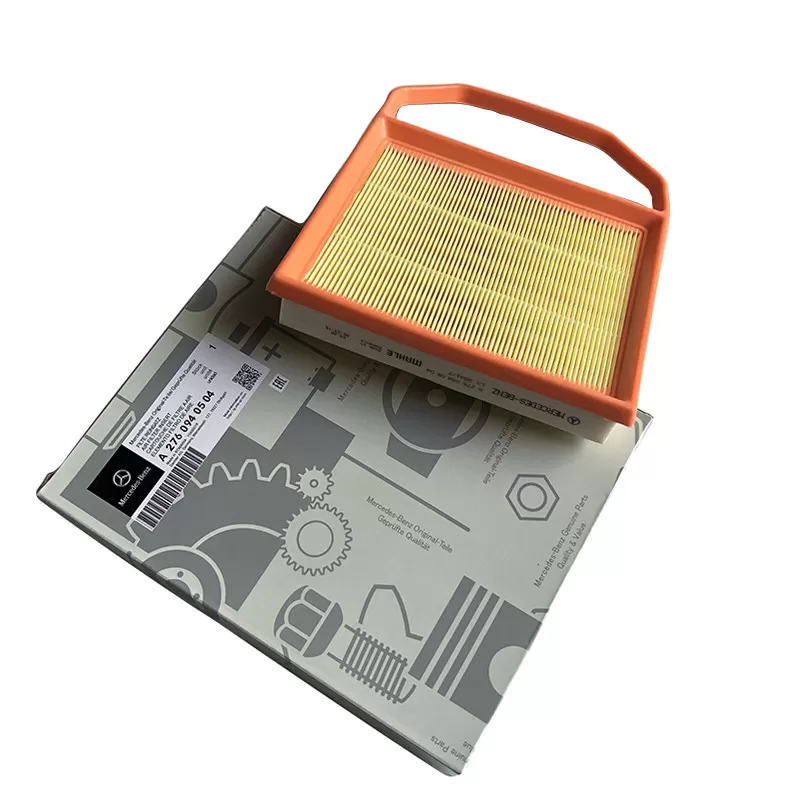
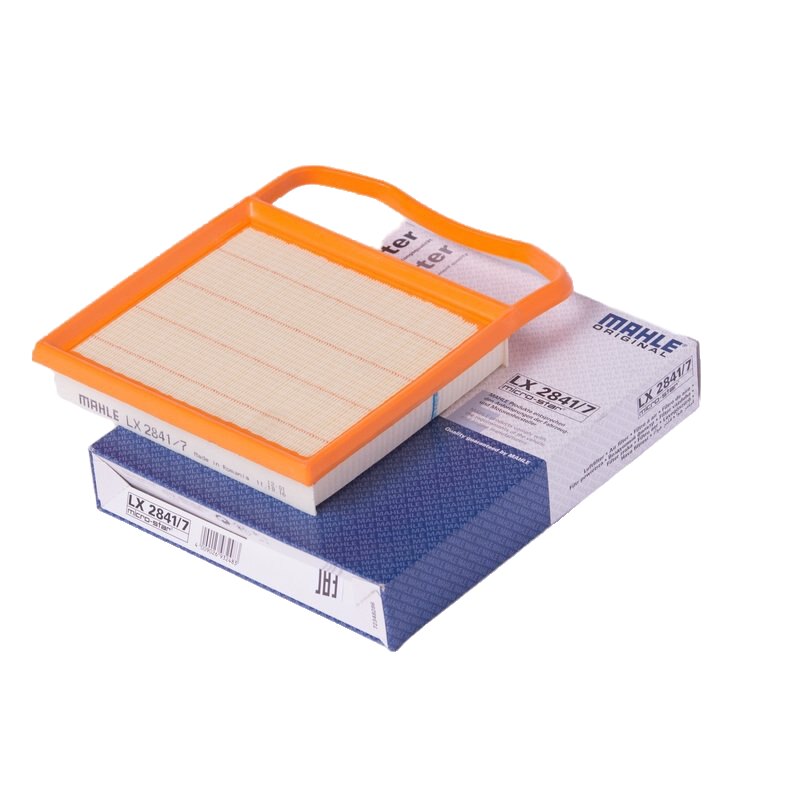
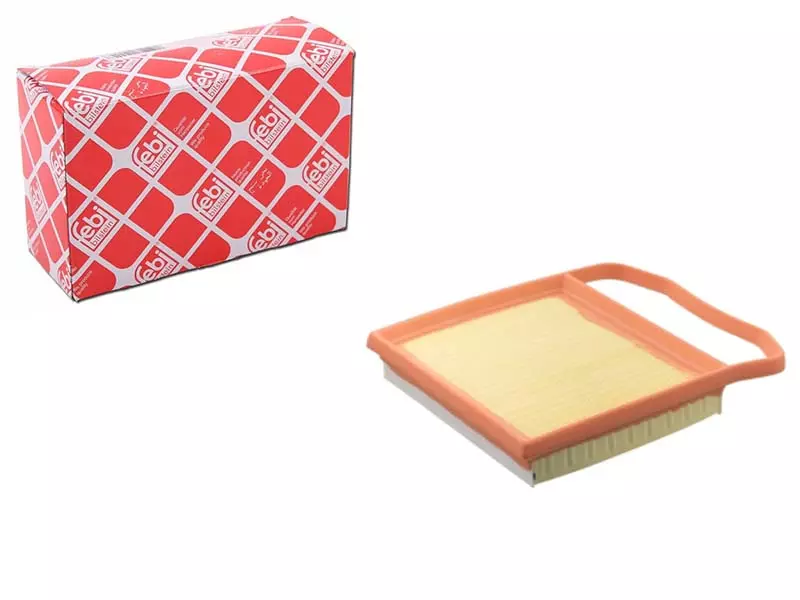
Genuine: the star on the box — and the OE maker's stamp on the filter inside.OEM: the supplier's filter in its own box — same engineering, no badge premium.OE-matching: a reputable specialist's equivalent for the same application.
02 Which should you buy?
There's no single right answer, but there is a sensible framework:
Genuine makes sense when it's the only option — very new models, dealer-only electronics, or warranty situations where you want the star on the box.
OEM is the sweet spot for almost everything else: identical or near-identical engineering, full compatibility, and meaningful savings. This is where we've deliberately positioned our whole range.
Reputable aftermarket earns its place on older cars and budget-sensitive repairs — provided the brand is one the industry trusts.
Whichever way you go, the part has to match your exact vehicle. A "C-Class brake pad" doesn't exist — a W205 C300 with the sports brake package takes a different pad from a C200 on standard brakes. That's why the catalogue here is built on variant-level fitment data: select your car and you only see parts confirmed to fit it.
03 The German brands behind the star
These are the brands behind the parts we stock — from production-line OE suppliers like ATE, Lemförder and MANN-FILTER to OE-matching specialists like Febi and Zimmermann:
Service items come around on every car, no matter how well engineered. These are the categories that account for most of a Mercedes' running costs — the count beside each is how many parts we list with confirmed Mercedes-Benz fitment, and selecting your vehicle narrows them further to your exact variant:
Brake pads — the most frequent wear item on any car; ceramic and OE compounds for every model (38 fit a Mercedes-Benz)
Brake discs — replaced alongside pads once they reach minimum thickness; plain and coated German discs (35 fit a Mercedes-Benz)
Filters — oil, air, cabin and fuel — the heart of every A and B service (19 fit a Mercedes-Benz)
Suspension — control arms, bushes and links that restore the ride Mercedes intended (58 fit a Mercedes-Benz)
Engine — timing components, belts, tensioners, gaskets and mounts (83 fit a Mercedes-Benz)
Steering — tie rod ends and steering components built to OE spec (19 fit a Mercedes-Benz)
05 Keeping your Mercedes in top shape
Follow the factory service schedule. Mercedes' alternating A and B services exist for a reason — staying on schedule with oil, filters and inspections is the cheapest insurance a European car can have.
Fit quality parts, every time. A Mercedes is engineered as a system; one soft bushing or off-spec filter is felt everywhere. OEM or proven OE-matching parts keep the car feeling the way it left Stuttgart.
Know your limits. Filters, wipers and pads are honest DIY territory. Suspension, timing components and anything electronic are usually better left to a workshop with the right tooling — a good independent Mercedes specialist is worth their hourly rate.
06 Ready to shop?
This page is the buying guide. When you know what you are after, these are the lists:
More guides — brake pads and discs, wear sensors, oil and air filters, wiper sizes.
07 Frequently asked questions
Are genuine parts better than OEM parts?
In most cases they're the same part. Genuine parts are built by suppliers like ATE, Lemförder and MANN on the same production lines as their own-brand versions — the differences are the box, the part number and the price. Where a supplier's own-brand part exists, you're rarely giving anything up.
How often should parts be replaced?
Follow the maintenance booklet for service items, and deal with wear items — pads, discs, suspension bushes — when inspection says so rather than at fixed intervals. Age, mileage and driving style move those points around considerably.
Can I fit Mercedes parts myself?
Straightforward service items, yes, if you're comfortable with basic tools. For brakes, suspension and anything the car needs to be coded for, a professional workshop is the safer and often cheaper path once you factor in tooling.
Does Mercedes still make parts for classic models?
Yes — Mercedes-Benz Classic maintains a catalogue of over 50,000 part numbers reaching back to the pre-war cars. For the more common classics, OEM suppliers offer the same coverage at friendlier prices, and much of our range extends well back into the older model series.
Do you stock parts for my Mercedes?
We carry 345 parts with confirmed Mercedes-Benz fitment, covering 1,143 individual variants from older model series through to current cars. Select your Mercedes and the whole catalogue filters to what fits — product pages list the exact variants each part suits, with OE cross-references where available.