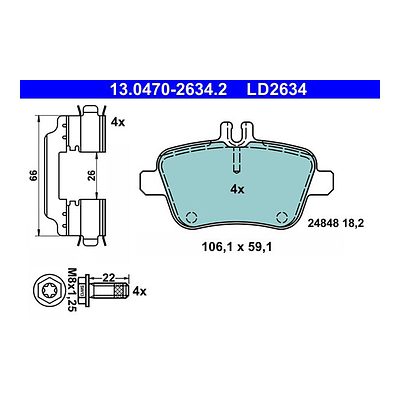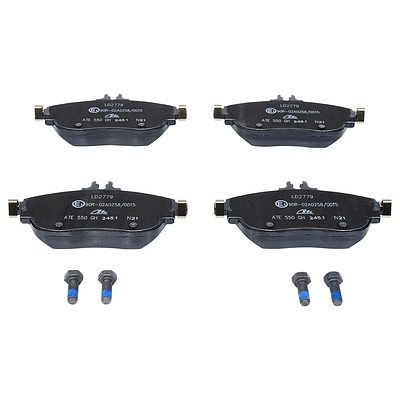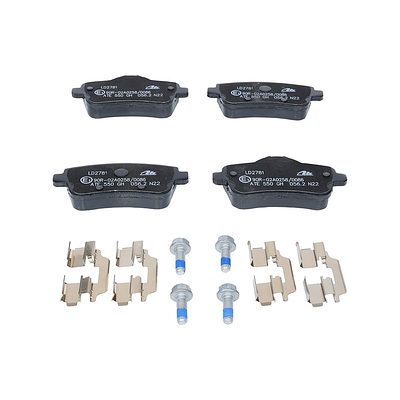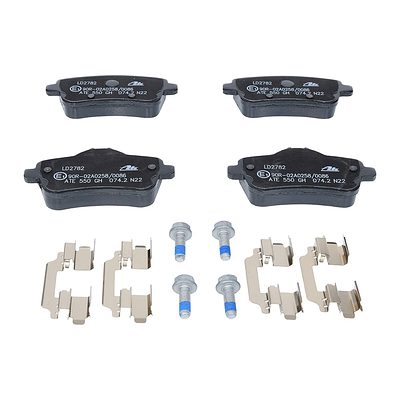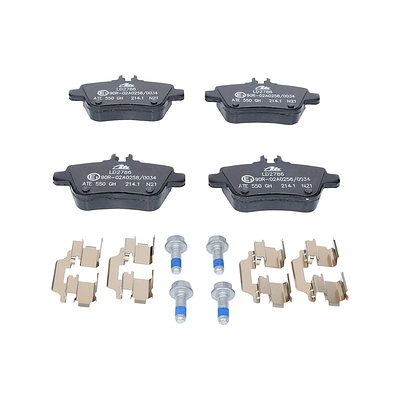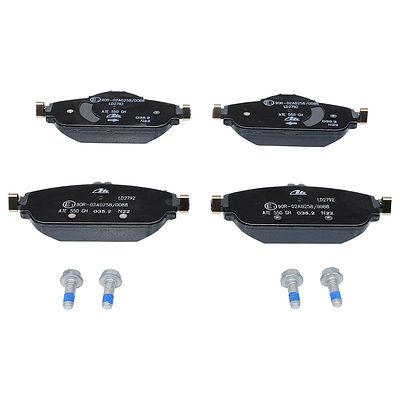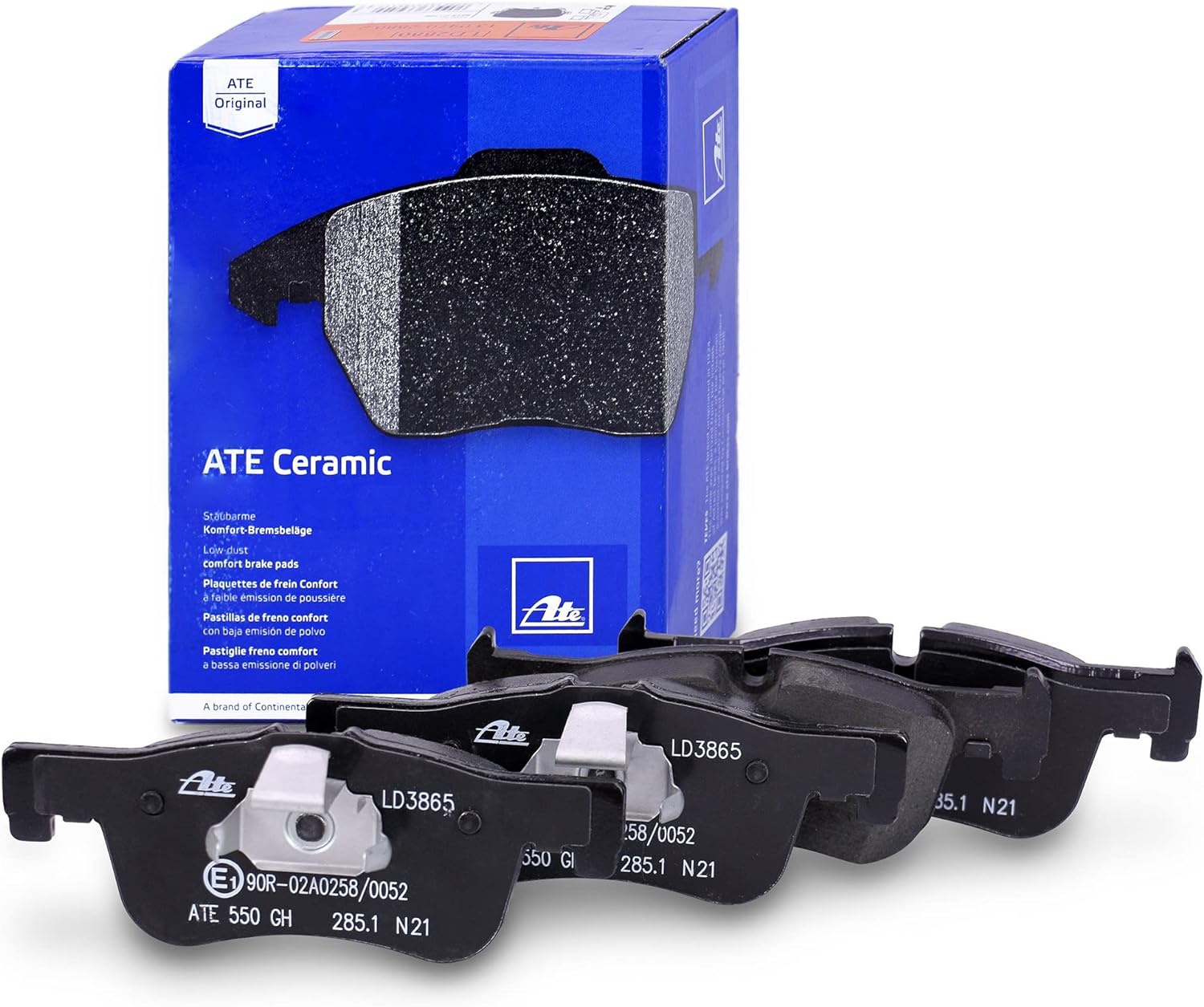
Brake pads are the hardest-working consumable on your car: they decide how it stops, how loud it is about it, and how often you're washing black dust off your wheels. ATE — an original-equipment brake supplier to Mercedes-Benz, BMW, Audi and Volkswagen for decades — developed its Ceramic range to remove the everyday annoyances of conventional pads without giving up braking performance.
01 Ceramic pads, explained
Every brake pad does the same job — it presses a friction material against the disc to turn motion into heat — but the compound that material is made from changes almost everything about how the pad behaves. Replacement pads fall into three families:
- Ceramic — a dense ceramic compound woven with fine copper fibres. Ceramic pads run quietly, produce noticeably less dust, and keep their bite across a wide range of temperatures. They're the low-maintenance choice for everyday and highway driving.
- Semi-metallic — steel or iron shavings bound with graphite and resin. Excellent at moving heat away from the disc, which suits heavy vehicles and hard driving, but they're the noisiest and dustiest of the three.
- Organic (NAO) — rubber, glass and aramid fibres in a resin binder. Cheap and gentle on discs, but they wear fastest and fade soonest when worked hard.
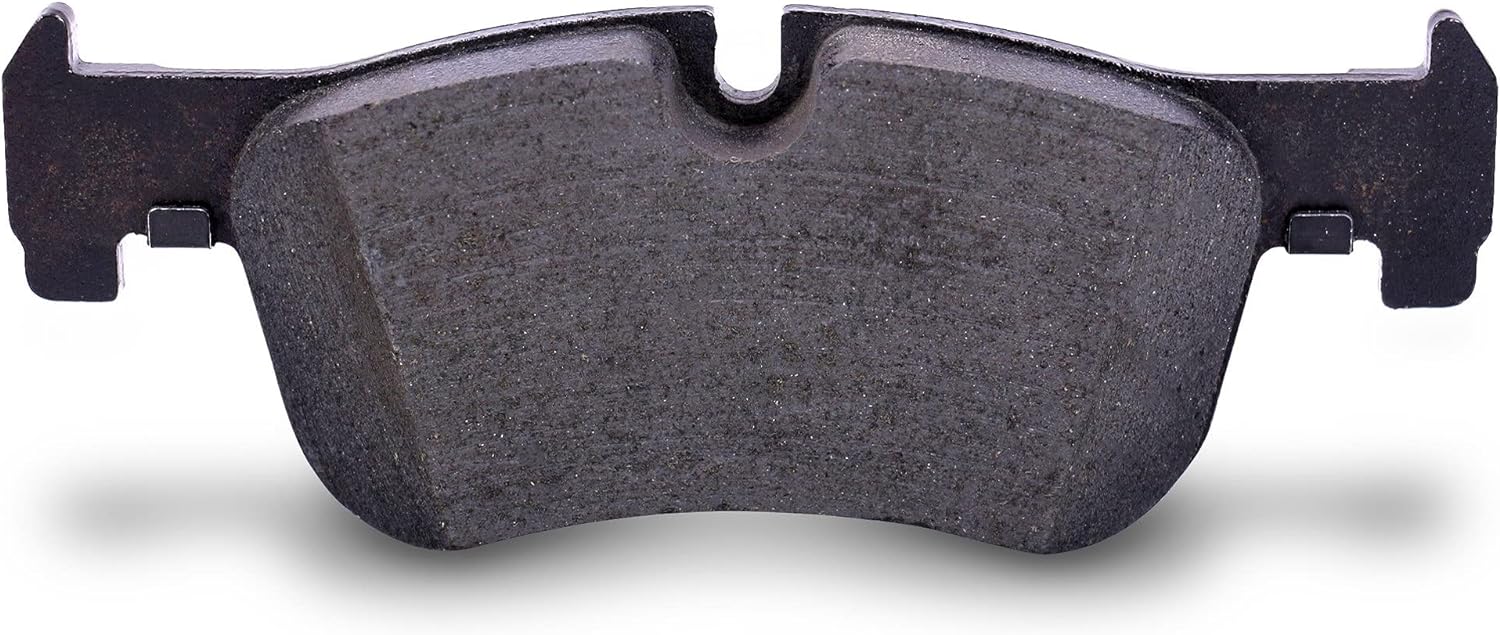
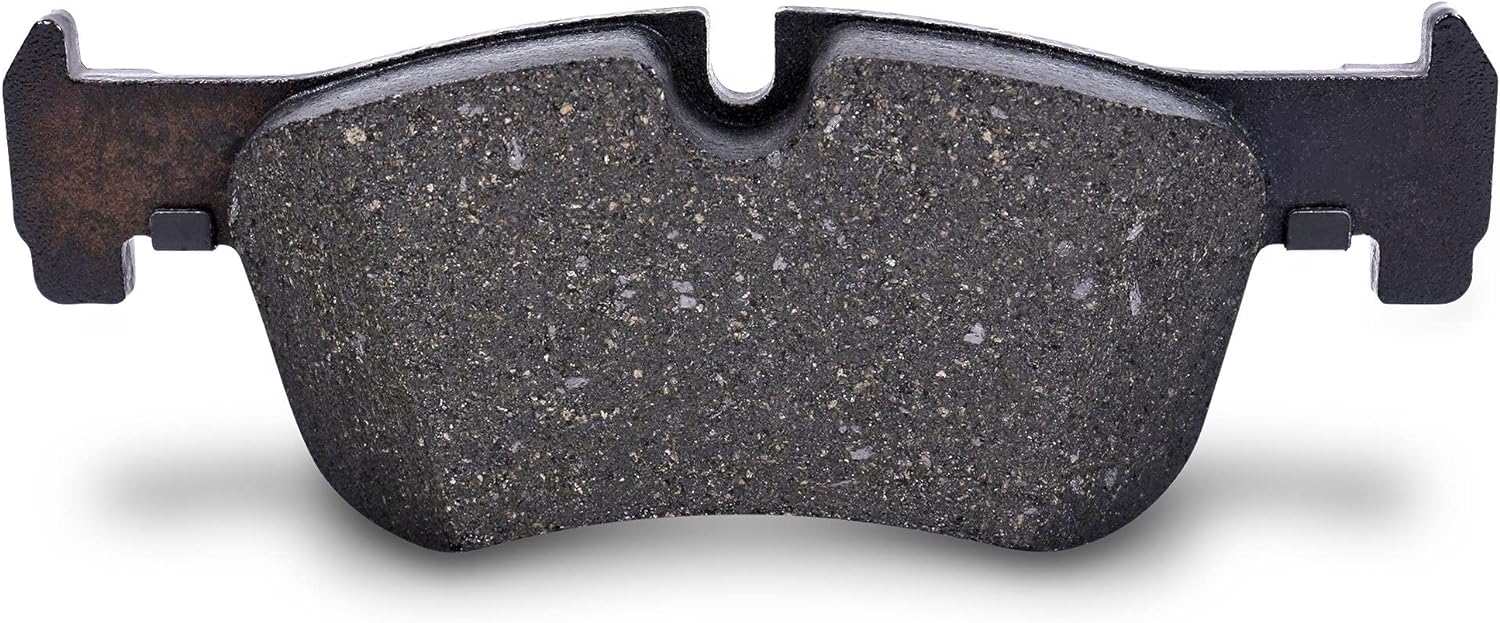
None of these is "best" in the abstract — the right compound depends on the car, the driving, and what you're willing to give up. For most European passenger cars on Australian roads, though, the trade ceramic offers — cleaner wheels and quieter stops at a modestly higher price — is an easy one to make.
02 What makes ATE Ceramic different
ATE Ceramic pads belong to a newer generation of low-abrasion friction materials. The compound is formulated to wear less — and to wear the disc less — than conventional pads, which is where most of the benefits come from: less material worn away means less dust on your wheels, longer intervals between brake services, and less waste over the life of the car.
The range has collected some serious accolades since launch: an innovation prize at the REIFEN trade fair, a listing in Automechanika's Green Directory for its reduced environmental footprint, and — the result that matters most — first place in the German ADAC brake test of July 2021, ahead of five rival products including original-equipment pads.
Every ATE Ceramic pad set is tested to the ECE R90 standard — the international type approval that requires replacement pads to perform within tight tolerances of the original part. They fit and function as a direct replacement for the factory pads, with no modifications and no compromises to your car's braking system.
In day-to-day driving, what you notice is what's missing: the squeal, the judder through the pedal, and the film of brake dust that turns silver wheels grey in a fortnight. ATE Ceramic pads were developed for premium European cars first, and the range has steadily grown to cover smaller cars as well — from premium sedans down to compact hatchbacks.
Two pairing notes worth knowing: the pads are at their smoothest and quietest on standard smooth-faced discs (they still perform properly on sports discs at speed), and they work best of all alongside ATE's own coated discs — replacing both together is the ideal brake refresh.
03 Ceramic vs semi-metallic vs organic
Here's how the three compounds compare on the things owners actually care about:
| ATE Ceramic | Semi-metallic | Organic | |
|---|---|---|---|
| Stopping power | Consistent bite from cold through to hard, repeated stops | Strong, especially once warm | Adequate for gentle driving; fades when hot |
| Behaviour when hot | Very stable — the compound holds its friction level at high temperature | Good heat transfer away from the disc | Weakest under sustained heat |
| Pad & disc life | Longest — low abrasion spares both pad and disc | Good pad life, harder on discs | Shortest |
| Noise | Quietest of the three | Prone to squeal | Quiet while fresh |
| Brake dust | Noticeably less — wheels stay cleaner for longer | Heavy, dark dust | Moderate |
| Price up front | Higher | Moderate | Lowest |
| Value over time | Strong — fewer replacements and longer disc life offset the price | Reasonable | Cheap to buy, frequent to replace |
The short version: semi-metallic still makes sense for towing and track work, and organic pads have their place on a tight budget — but for the way most of us actually drive, ceramic wins on the everyday measures and pays back its premium through longer pad and disc life.
04 Fitting and looking after them
ATE Ceramic pads install exactly like the pads they replace — no special hardware, no adaptation. A few rules of thumb for getting the most from a set:
- Confirm fitment first. Pad shapes are specific to the exact model, year and brake package. Use the vehicle selector and we'll show only the sets confirmed to fit your variant, matched against manufacturer fitment data.
- Replace in axle sets. Always change both wheels on an axle together so braking stays even side to side.
- Inspect while you're in there. New pads are the natural moment to check disc thickness and condition, caliper slides and brake hoses. If the discs are near their wear limit, replace pads and discs as a pair.
- Leave it to a professional if in doubt. Brakes are not the system to learn on — a workshop can fit a set of pads quickly and will check the rest of the system while they're in there.
- Drive them in gently. Smooth, moderate braking for the first couple of hundred kilometres lets the new friction surfaces mate properly and keeps them quiet for the long run.
05 When to replace your pads
Ceramic pads last longer than conventional ones, but no pad lasts forever. Have your brakes inspected promptly if you notice any of these:
- Longer stopping distances or a pedal that needs more pressure than it used to.
- Squealing or grinding. A high-pitched squeal is often the built-in wear indicator doing its job; grinding means metal on metal — stop driving and have it seen to immediately.
- Low pad material. If the friction material is below the manufacturer's minimum thickness (or the dash wear warning is on), the set is due.
- Vibration under braking usually points to the discs rather than the pads — worth checking both.
06 Frequently asked questions
Will ATE Ceramic pads fit my car?
If it's a European car, quite possibly — the range covers a wide spread of European models, from city cars to performance sedans. Select your vehicle and the catalogue filters to the exact sets confirmed for your variant, or browse the full ATE brake pad range.
Are ceramic pads road-legal in Australia?
Yes — they're a fully compliant direct replacement for your factory pads. ATE Ceramic pads carry ECE R90 type approval, so their performance is certified to sit within tight tolerances of the original part.
Do I need special discs to run them?
No — they work with your existing discs. They're at their best on smooth-faced discs in good condition, and ideally paired with new ATE discs if yours are close to the wear limit.
Are they worth the extra cost?
Over the life of the brakes, usually yes. The pads themselves last longer, they wear the discs less, and your wheels need cleaning less often — so the modest premium at the checkout tends to come back as fewer brake services down the track.