Mercedes-Benz dashboards speak in colour before words: red means stop now, amber means have it looked at soon. Here are the ten Mercedes warning lights owners ask about most: what each means, whether you can keep driving, the likely cause and the usual fix.
01 Red vs amber: how Mercedes ranks its dashboard symbols
Colour tells you how urgent a symbol is before you read a word.
- Red — safety or engine at risk: brake system, coolant, oil pressure, charging, airbags.
- Amber (yellow) — a system switched off or due for service: ABS, ESP, check engine, tyre pressure, pad wear.
- Green and blue — status only: high beam, cruise control, indicators.
Most models from the A-Class up also print a plain-language message beside the symbol; the owner's manual lists every one.
Red: pull over when safe, switch off, and find out why before continuing. Amber: drive gently and book an inspection promptly. A flashing amber light counts as red.
02 "Check brake pads": the brake pad wear indicator (amber)
At least one pad has worn down to its sensor: not an emergency, but not to be left.
How the wear sensor works
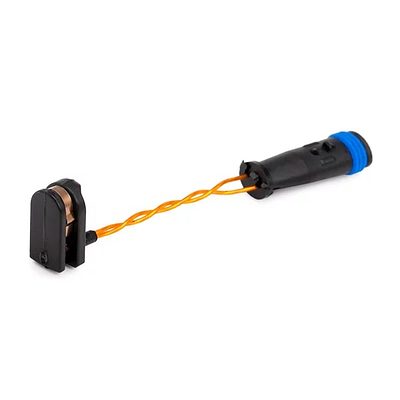
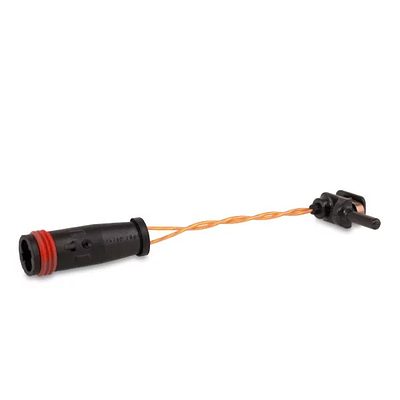
Mercedes fits an electronic wear sensor: a plastic contact with a wire loop inside, clipped into the pad, typically one per axle. As the pad wears, the brake disc (rotor) grinds through the loop, breaks the circuit and triggers the message. The sensor is therefore single-use: once tripped it is replaced with the pads, never reused. A new ATE brake pad wear sensor goes in with them.
Why the light can come on early
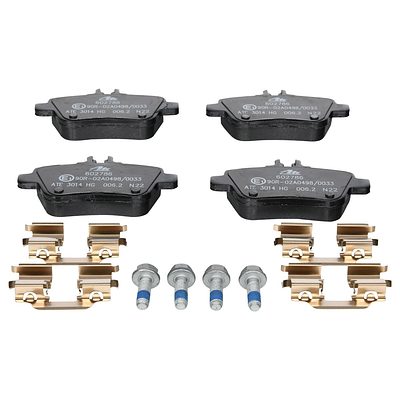
A chafed lead, a corroded connector, a badly seated sensor or a rotor lip catching the contact can all trip the light with material still left, so treat it as a prompt to inspect every corner. Worn pads get a matched set of brake pads and new sensors — ATE offers a standard pad set and the low-dust ATE Ceramic range — and the vehicle selector confirms which set and wear sensor suit your car.
How long do you have? There is no honest number: driving style, pad compound and whether the sensor tripped early all change it. Have the pads inspected promptly and brake gently until then; grinding, judder or a longer pedal means stop. Brakes are safety-critical, so let a qualified mechanic confirm.
03 Brake system warning (red)
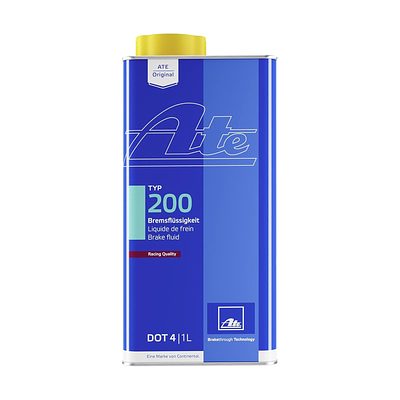
A red circle with an exclamation mark means the park brake is on, the fluid is low, or the hydraulics have a fault. Release the park brake; if the light stays on, check the reservoir. A low level usually means worn pads (caliper pistons extend and draw fluid) or a leak. Top up only with the DOT 4 grade in your manual, such as ATE SL.6 or ATE TYP 200 from our brake fluid range, and find the cause. A leak or a soft pedal is a tow, not a drive home.
04 ABS warning (amber)
ABS in a circle means the anti-lock system has switched itself off. The base brakes still work, but wheels can lock under hard braking, and ESP usually drops out too, sharing the sensors. The usual cause is a wheel speed sensor (broken lead, dirty tone ring); less often the ABS module. Drive gently and have the fault code read.
05 ESP / traction control (amber)
The triangle with a circling arrow is ESP. Flashing while driving is normal: it is stopping wheelspin. Steady on means ESP is switched off (check the button) or faulty. Besides shared wheel speed sensors, the steering angle sensor, brake light switch and a weak battery are common culprits. Safe to drive with care; book a scan.
06 Check engine (amber)
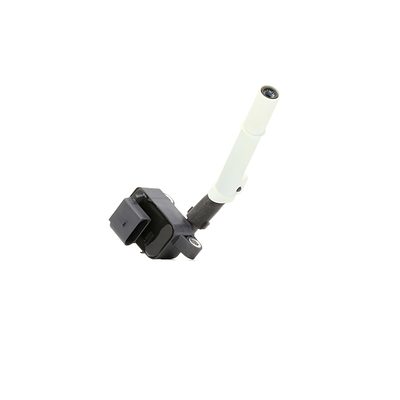
The engine outline is the malfunction indicator. Steady means a logged fault, usually ignition, fuel or emissions; flashing means an active misfire that can damage the catalytic converter, so ease off and have it checked at once. On petrol engines a failed ignition coil is a frequent trigger: the car runs rough on one cylinder. A Bosch ignition coil is the OE-quality swap where the vehicle selector confirms fitment. A loose fuel cap or worn oxygen sensor are other regulars.
07 Coolant temperature (red)
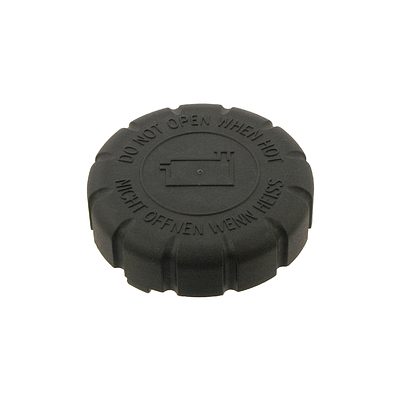
The red thermometer, often with "Coolant: stop vehicle, switch engine off", means the engine is overheating or coolant is low. Stop and let it cool before opening anything. Causes include a slow leak, a stuck thermostat, a stalled fan, a water pump or a worn reservoir cap: it keeps the system pressurised, and when its seal fails coolant boils earlier and is pushed out. A Febi coolant reservoir cap is a low-cost first check; cooling system parts cover the rest. Never drive on with this light.
08 Oil level and oil pressure (amber and red)
Mercedes separates level from pressure. An amber "Check oil level" or "Add 1.0 L of engine oil" message means the engine is low, usually from normal consumption: top up with the correct grade and carry on. The red oil can is oil pressure: the bearings are no longer being fed. Switch off immediately. Causes range from a very low level or failed sensor to a worn pump. Regular oil and oil filter changes are the only real prevention. Most of the Mercedes-Benz owner guides by model list the engine oil capacity recorded for the version they cover, and many also give the oil specification.
09 Battery / charging (red)
The red battery symbol means the alternator is not charging, not that the battery is flat; you are on stored charge and will not get far. Causes are a worn alternator or a snapped or slipping serpentine belt. If the belt has gone, the water pump and power steering go with it, so treat the light as a stop. Belts and tensioners are under belts and pulleys; the alternator is a workshop diagnosis.
10 Tyre pressure (amber)
The flat-tyre outline is the tyre pressure monitor. Steady means a tyre is below placard pressure: a slow puncture, a cold morning or an un-reset rotation. Check all four with a gauge, inflate to the sticker in the fuel flap or door jamb, and reset the monitor. Flashing then steady means the monitor itself has a fault, often a sensor battery. Safe to drive once pressures are confirmed.
11 SRS / airbag (red)
SRS covers airbags and belt pretensioners. A steady SRS light after start-up means a fault has switched the system off, so the airbags may not deploy in a crash. The car drives normally, which is why it gets ignored. Common causes are the seat occupancy or belt buckle sensor, a connector disturbed under a seat, or the steering column clock spring. Workshop only; airbag circuits are not DIY territory.
12 When to stop driving immediately
Pull over as soon as safe for the red oil can, the red thermometer, a red brake warning with low fluid or a changed pedal, a red battery light with a failed belt, and a flashing check-engine light. Everything else lets you drive gently to a workshop, but "lets you" is not "ignore".
| Light | Keep driving? | Usual fix |
|---|---|---|
| Check brake pads | Gently; inspect soon | Pads, wear sensor |
| Brake system | Only if park brake | Fluid, pads, leak repair |
| ABS | With care | Wheel speed sensor |
| ESP | With care | Steering angle sensor |
| Check engine | Steady yes; flashing no | Coil, plugs, sensors |
| Coolant temperature | No | Cap, thermostat, coolant |
| Oil pressure / level | Pressure no; level yes | Oil, filter, sensor |
| Battery | Briefly | Belt, alternator |
| Tyre pressure | After checking | Inflation, TPMS sensor |
| SRS | Yes, repair soon | Seat or buckle sensor |
Open Mercedes-Benz parts, pick your model in the vehicle selector, and the catalogue narrows to confirmed-fitment parts. Unsure? Contact us first.
FAQ Common questions
What does "Check brake pads" mean on a Mercedes?
The wear sensor in at least one pad has been worn through by the rotor, breaking its circuit: either the pads on that axle are nearly finished or the sensor was damaged early. Have every wheel inspected promptly and replace worn pads as a set with new sensors.
Mercedes brake pad warning light: how long do I have?
There is no reliable number. It depends on how much material remained when the sensor tripped, the pad compound and how hard you brake, and a sensor cut early may mean the pads are still fine. Have them inspected promptly and avoid heavy braking until then.
Can I keep driving with the ABS or ESP light on?
Usually yes, with care. Both are amber: the base brakes work normally, but anti-lock and stability assistance are off, so a wheel can lock or the car can slide where it would normally correct itself. Leave extra room and have the fault code read soon.
Do I need a new wear sensor when I change the pads?
Yes, if it has tripped. Mercedes wear sensors are single-use contacts: the rotor cuts the wire loop to trigger the warning, so a tripped sensor cannot be reset or reused. Fit a new sensor with the pads and confirm the part with the vehicle selector.