Buying a Mercedes-Benz part is mostly identification: every component has a number, the suppliers who build parts for Mercedes cross-reference it, and a fitment catalogue narrows the choice to your exact variant. Here is how a Mercedes-Benz part number is built, where to find yours, how OE cross-references work on our product pages, and when to use the vehicle selector or ask rather than guess.
01 How a Mercedes-Benz part number is structured
Every Mercedes part number search starts with the same shape: a letter and ten digits, printed as A 204 421 08 12 or run together as A2044210812. The A prefix marks a standard Mercedes part; bolts and clips often carry an N instead. The ten digits are read in groups. In general terms:
- First three digits — usually the model series the part was first developed for: 204 points to the W204 C-Class family, and 000 means it was not tied to one model. Mercedes reuses parts across platforms, so the prefix shows origin, not every fitment.
- Middle three digits — the functional group. Parts doing the same job share a group regardless of model.
- Last four digits — the individual item and, in the final pair, its version. This changes when Mercedes supersedes a design, so an old part's number may differ at the end from the current one yet identify the same fitment.
02 Mercedes part number lookup: where to find yours
No Mercedes part number finder beats a reliable source. In rough order of reliability:
- The old part — brake discs (rotors) usually have the number cast into the hat, pads carry it on the backing plate, filters print it on the housing. Photograph it before it goes in the bin.
- A service invoice — workshops itemise parts by number, so the last invoice confirms what was fitted.
- The dealer parts department — dealers work from an electronic OEM parts catalogue keyed to the VIN and can quote the current genuine number.
- The VIN — the 17-character vehicle identification number does not contain part numbers but unlocks them: it identifies model series, engine, transmission, build date and factory option codes.
It is on the compliance plate, at the base of the windscreen, on the door-pillar label and on the registration papers. Option codes matter — one model year can carry different brake sizes or engines depending on the package — and the VIN resolves that.
03 How OE cross-references work on our product pages
Most wear parts on a Mercedes-Benz are made by original-equipment suppliers such as ATE, MANN-Filter, Hengst, Lemförder, Bosch and INA, who also sell the same design under their own number. A cross-reference is the published link between the two.
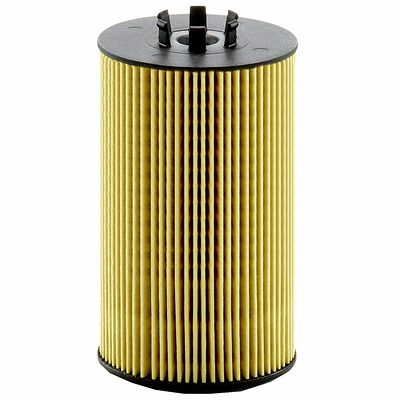
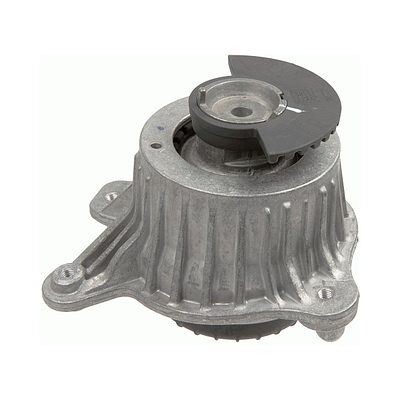
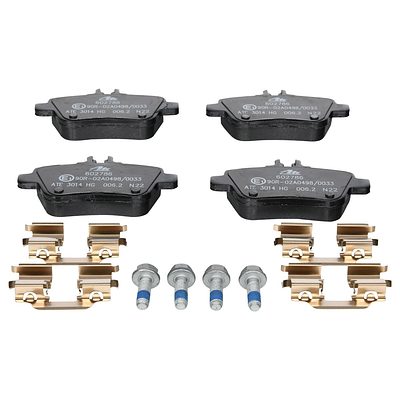
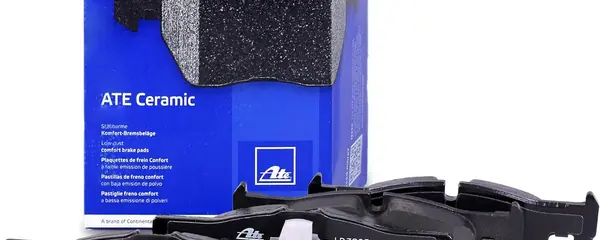
Take the ATE Brake Pad Set 13.0460-2786.2. ATE's number says nothing about which Mercedes it suits, so the product page lists the OE numbers it replaces. A MANN-Filter HU 8012z oil filter or a Lemförder engine mount is listed the same way. That is how a Mercedes-Benz part number search works here: type the A-number, with or without spaces, and the results are parts whose OE references include it.
- One-to-many is normal — one supplier number often replaces several superseded Mercedes numbers, so check the full OE list.
- Many-to-one is also normal — one Mercedes number may be matched by ATE, Zimmermann and Brembo alike; a choice of brand, not a conflict.
- A cross-reference is not a fitment check — it cannot know which number your car needs; if in doubt, confirm with the vehicle selector.
04 No part number? The vehicle selector is your Mercedes parts catalogue online
Most people looking for a Mercedes parts catalogue online have a car and a symptom, not a number. Choose make, model and variant on any category or product page and the listing filters to parts with TecDoc-confirmed fitment for Australian-market cars; each product then shows a 'fits your vehicle' confirmation and a compatible-vehicle table.
The variant step is where the accuracy comes from: a C-Class of one year may have several engines and an optional package that changes brake disc diameter, and the selector separates them. Where a part applies only to cars with a certain option, the table says so. The selector is at its best when buying several parts for one job: front brake pads, a pair of brake discs and a wear sensor confirmed against the same vehicle in one session, starting from the Mercedes-Benz parts hub.
05 Left, right, front, rear and 'set of 2'
Catalogues define left and right from the driver's seat facing forward, whichever side the steering wheel is on. On an Australian right-hand-drive Mercedes, left-hand (LH) is the passenger or kerb side and right-hand (RH) is the driver's side.
| Part | How it is sold | What to check |
|---|---|---|
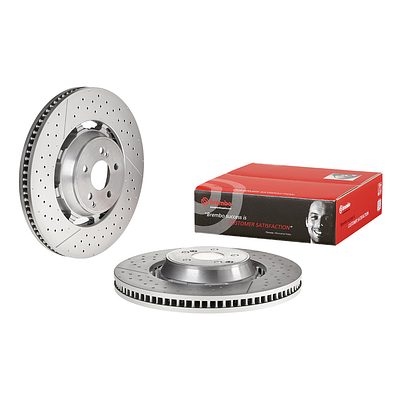
| Brake discs (rotors) | Usually a 'Set (2 pcs)' — a pair for one axle, such as the Brembo 09.B848.33. Sport discs can be side-specific singles, such as the Zimmermann 348mm front LH: one disc, one side. | Front or rear; diameter; one LH and one RH if singles. |
| Brake pads | One set covers one axle — all four pads. | Front or rear. |
| Wear sensors | Individually, such as the ATE 24.8190-0425.2; single-use, replaced with the pads. | Front or rear; how many your car has. |
| Engine mounts | Individually; left and right often differ. | Side; engine variant. |
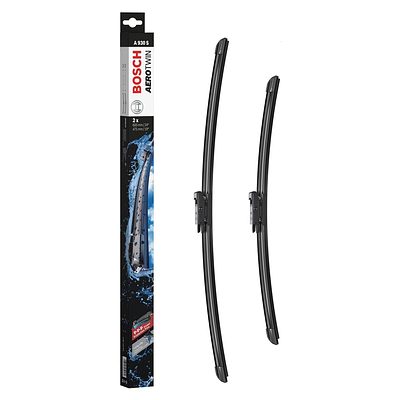
| Wiper blades | Front sets hold two lengths, such as the Bosch A930S 600mm/475mm; rear blades are separate. | Which length goes where. |
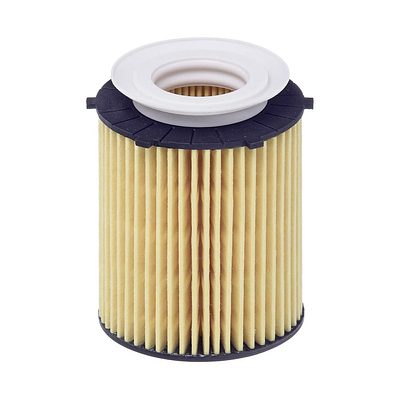
| Oil filters | Individually, with housing seals. | Engine code, not just model. |
06 What to look for in packaging and documentation
Check the parcel before the car is on stands:
- A sealed, branded box — the part number and barcode on the label should match the invoice and the product page.
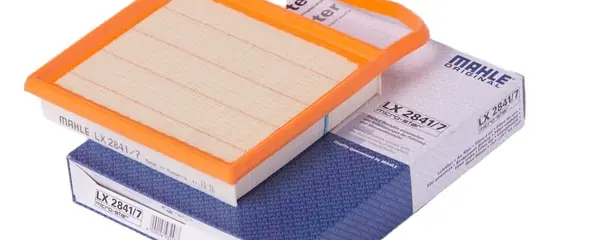
- Markings on the part — pads carry the brand and number on the backing plate, rotors add a minimum-thickness figure, filters print it on the housing; box and part should agree. Many boxes also list the Mercedes numbers the part replaces.
- Everything the job needs — oil filters such as the Hengst E818H D238 come with housing seals; pad sets may include shims or clips; a fitting leaflet is normal with brake parts.
- Condition — a coated disc such as a Zimmermann Coat Z rotor should arrive with the coating intact; rubber mounts should be free of cracking.
If anything does not match, do not fit it; unfitted parts in original packaging are the simplest to exchange under the returns policy.
07 When to ask rather than guess
Most orders are unambiguous once the VIN is in hand. Send us the details first when you have:
- Two candidates for one car — the compatible-vehicle table lists your model with different brake sizes or engine codes.
- A superseded number — the old part's number appears in no OE list, which usually means it has been replaced upstream.
- A mid-series change or private import — Mercedes changes components part-way through model runs, and a privately imported car may not match the Australian-market catalogue.
- An AMG or option-package car — larger brakes and different suspension are common, so the standard model's numbers may not apply.
Use the contact page with the VIN, a photo of the old part showing its number, and what you are fixing; with those we can identify the part rather than estimate it. Our other Mercedes-Benz guides are in the resources hub. Brakes are safety-critical: if unsure, have a qualified mechanic confirm the parts and do the fitting.
FAQ Common questions
How do I look up a Mercedes part number?
Take the number from the old part, a service invoice or your dealer's parts department, which can quote it from your VIN. Enter that A-number into the site search, with or without spaces; the results are the parts whose OE references include it. Without a number, use the vehicle selector instead.
What do the digits in a Mercedes-Benz part number mean?
A Mercedes-Benz number is a letter, usually A, followed by ten digits, such as A 204 421 08 12. In general terms the first three digits indicate the model series the part was developed for, the middle three its functional group, and the last four the item and its version. The prefix hints at origin, not fitment.
Can I browse a Mercedes parts catalogue online without a part number?
Yes. The vehicle selector on every category and product page works as a catalogue of the parts we stock: choose make, model and variant and the listing narrows to parts with TecDoc-confirmed fitment for Australian-market cars. Each product page then shows a 'fits your vehicle' confirmation and a compatible-vehicle table.
Does a matching OE cross-reference guarantee the part fits?
Not on its own. A cross-reference states that the supplier designed the part to replace that Mercedes number; it cannot know whether the number you started with is right for your car. If it came from the old part or a dealer invoice for your VIN, the match is reliable. Otherwise confirm with the vehicle selector.