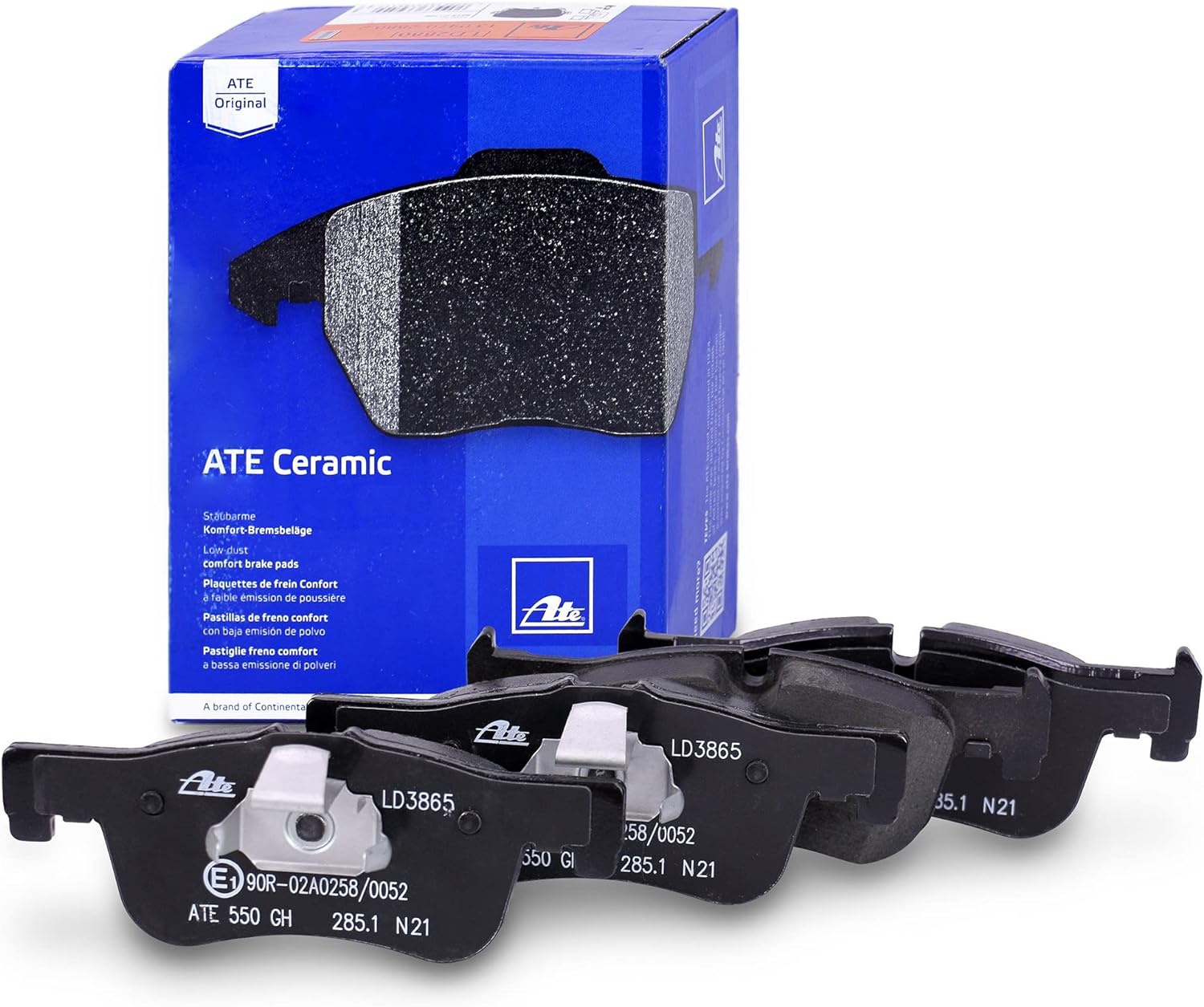
Brake pads wear a little on every stop, and a Mercedes-Benz is built to tell you when they are getting low: through noise, the dashboard, the pedal and, if those are ignored, damage to the brake discs (rotors). Some signals mean replace now, some mean inspect soon, and some are something else entirely. Here are the five worth acting on.
01 Squeaky brakes: a squeal on light braking
Brakes squeaking is the complaint we hear most, and a squeak does not automatically mean worn pads. Three things make a similar noise; the one to act on is new and constant.
- The mechanical wear indicator — a small steel tab on some pads that rubs the rotor once the friction material wears down to it, squealing on light braking. That is a deliberate warning: the pads are done. Many Mercedes pads rely on the electronic sensor below instead, so silence is not proof of health.
- Glazing — overheated pads develop a hard, shiny surface that squeals under light pressure and bites less than it should, even with plenty of thickness left.
- Dust, moisture and hardware — a squeak on the first stops of the morning that clears as the brakes warm is a rust film on the rotor, and normal. Constant squeaking with plenty of pad left is more often dust, missing shims or dry contact points; a thin coat of ATE Plastilube on the pad ears and slide pins often cures it.
02 The brake pad wear indicator on the dashboard
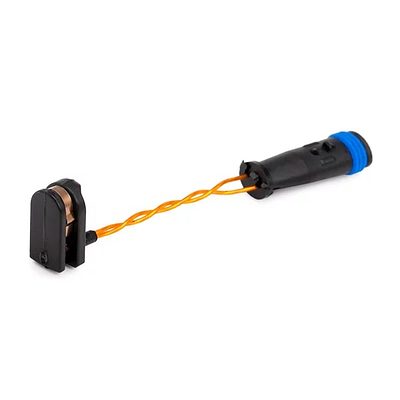
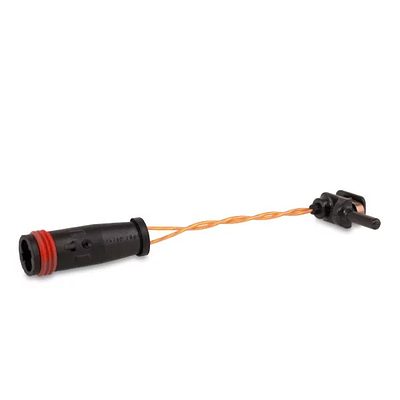
Mercedes-Benz has used an electronic brake wear indicator for decades: a wire loop moulded into a plastic sensor body, clipped into one pad per axle. When the friction material wears to a set depth, the rotor grinds through the plastic and breaks the wire; the car sees the open circuit and shows a "Check brake pads" message or brake wear symbol.
The other pads on the axle are usually at a similar point, but the message does not measure what is left, so how far you can drive afterwards varies from car to car: treat it as a booking, not a countdown.
The sensor is destroyed doing its job and cannot be reset, so order the matching brake pad wear sensor with the pads (ATE 24.8190-0425.2 or 24.8190-0410.2, for example) and use the vehicle selector to confirm which your car takes. Even if it has not tripped, fit a new one: the tip is usually part-worn.
03 Longer stopping distances or a changed pedal
Pads rarely fail suddenly; they fade, so a longer stopping distance is easy to miss until you drive a car you know well. Thin pads run hotter and lose bite sooner in a run of hard stops; glazed pads bite less at any temperature. If you are pressing harder or earlier than you used to, inspect the pads first.
A soft or spongy pedal is different. Pads rarely cause it; it points to air in the system, a leak, or brake fluid that has absorbed enough moisture to boil under heat. A pad change is the time to renew brake fluid at the grade your owner's manual specifies, such as ATE TYP 200 DOT 4. A sinking pedal, or a car that pulls to one side, needs a qualified mechanic before it is driven further.
04 Grinding: metal on metal
A grinding or scraping noise under braking means the friction material is gone on at least one pad and the steel backing plate is pressing on the rotor. Metal on metal stops the car poorly, generates enormous heat and grooves the rotor face quickly, so the job becomes pads, a pair of brake discs and a sensor. A stone behind the dust shield makes a similar scrape that varies with wheel speed rather than braking; the real thing is consistent, loud and not something to keep driving on. Rotors are replaced in pairs, which is why an ATE brake disc set or a Zimmermann coated pair comes as two discs.
05 How to check brake pad wear on a Mercedes
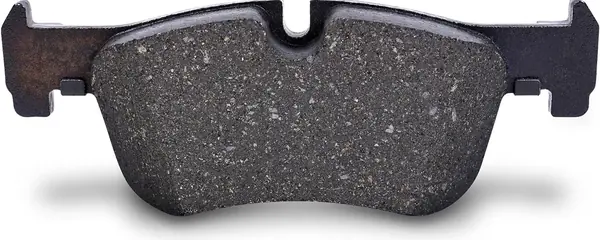
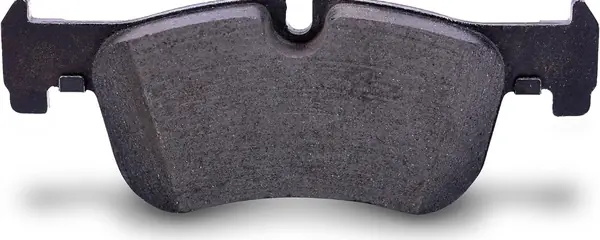
The outer pad is visible through the spokes of most alloy wheels: the darker block of friction material between the steel backing plate and the rotor. New pads start with roughly 10 mm or more; as a rule of thumb, replacement is due once the material is thinner than the backing plate or down to around 3 mm, though your owner's manual sets the figure. A workshop measures both pads with the wheel off, because the inner pad is hidden and often wears faster. The wear pattern matters too:
- Inner pad much thinner than outer, or tapered across one pad — dry or seized slide pins, so the caliper cannot centre. New pads fitted without greasing the pins wear the same way; use a high-temperature brake grease, never a general-purpose one.
- A raised lip on the rotor edge — the taller it is, the more rotor has worn away; a pronounced lip usually means the rotor is near its stamped minimum thickness.
06 What happens if you ignore the signs
Pads are designed to be the part that wears. Leave them too long and the damage moves outward: the rotor is scored, the caliper piston over-extends and drags its seal across a corroded bore, and heat goes into the fluid, so the pedal fades when you need it most. Pads and a sensor at the wear light cost a fraction of pads, rotors, a sensor and a caliper overhaul after grinding. Brakes are safety-critical; if in doubt about any sign above, have a qualified mechanic inspect the car.
07 Which pads to fit: ATE standard or ATE Ceramic
ATE is an original-equipment brake supplier to Mercedes-Benz, which is why we suggest it first. The choice is between two compounds.
| Consideration | ATE standard pads | ATE Ceramic pads |
|---|---|---|
| Friction material | OE-specification compound | Ceramic compound for everyday driving |
| Brake dust | Normal dark residue | Noticeably less visible dust |
| Noise | Quiet when correctly fitted | Designed to be quieter still |
| Best suited to | Factory feel; towing or spirited driving | Daily commuting; clean wheels |
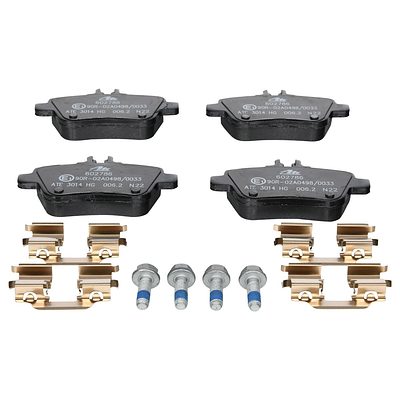
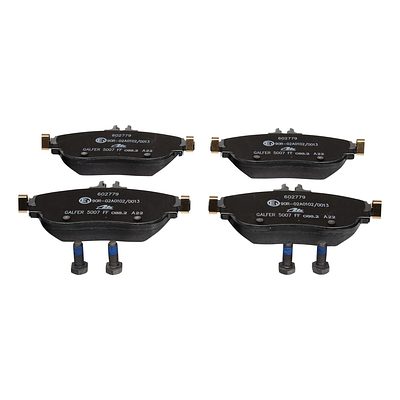
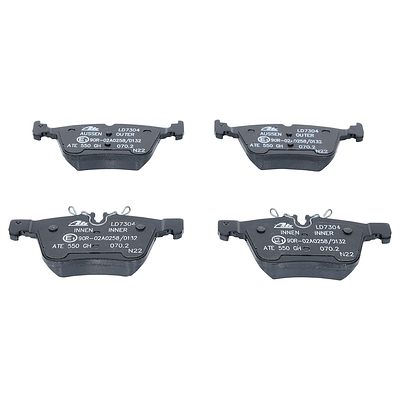
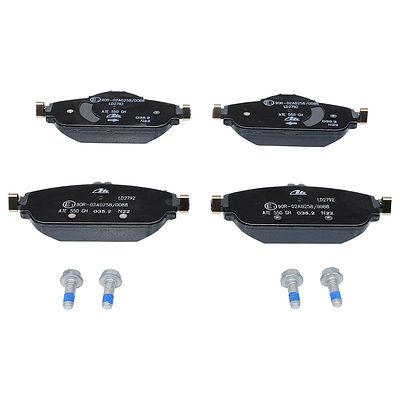
Neither is better in the abstract. For a daily driver where clean wheels matter, an ATE Ceramic pad set such as 13.0470-7304.2 or 13.0470-2792.2 is the obvious pick; our ATE Ceramic guide covers the compound in depth. If you tow, drive hard, or want the car to stop as it did when new, the ATE standard pad set 13.0460-2786.2 or 13.0460-2779.2 is the factory answer. Brembo and Zimmermann options sit alongside them in the brake pads category.
08 Confirm fitment before you order
Mercedes-Benz fits different pad shapes, sizes and sensor types across models, years, engines and brake packages, so the part numbers above are examples, not a fitment claim. Use the vehicle selector on any category or product page: choose make, model and variant, and the listing filters to parts with TecDoc-confirmed fitment for Australian-market cars. Each product page then shows a "fits your vehicle" confirmation, a compatible-vehicle table and OE cross-reference numbers to check against the old pad. Everything in the brakes range ships from Melbourne, and the Mercedes-Benz parts hub covers other service items worth doing while the wheels are off.
FAQ Common questions
How do I check brake pad wear on a Mercedes?
Look through the wheel spokes at the outer pad: the block of friction material between the steel backing plate and the rotor. Thinner than the backing plate, or around 3 mm, means replacement is due. The inner pad is hidden and often wears faster, so a check with the wheel off is the only complete answer.
Why are my brakes squeaking if the pads are not worn?
A squeak on the first stops of the day is usually a rust film on the rotor and clears as the brakes warm. Persistent squeaking with plenty of pad left is more often glazing, dust, missing shims or dry contact points; cleaning, brake grease on the pad ears and slide pins, and if necessary new pads resolve most cases.
How long can I drive after the brake pad wear indicator comes on?
There is no safe number; it varies from car to car. The message means the sensor pad has reached the depth at which the wire loop was cut, not how much material remains. Have the pads inspected promptly and avoid hard braking until then. Grinding after the light means the margin has already gone.
Do I need a new wear sensor with new brake pads?
Yes. The Mercedes wear sensor is a single-use contact: the rotor cuts the wire loop to trigger the warning, and it cannot be reset. Even if the light never came on, the tip is usually part-worn and will not last another set. Fit a new sensor with the pads; the warning clears once the circuit is complete.